Galmpton: Rooted in Place
Palimpsest as Living Memory
Galmpton: Rooted in Place was a sustained 100‑day artistic research project undertaken by Liza Jane in the South Hams village of Galmpton, Devon. With its rich historical layers, shifting geology, and a tightly woven community identity, Galmpton offered fertile terrain for investigation. The project sought not only to observe a place, but to draw out its internal logic—the visible and invisible lines that connect people, landscape and time.
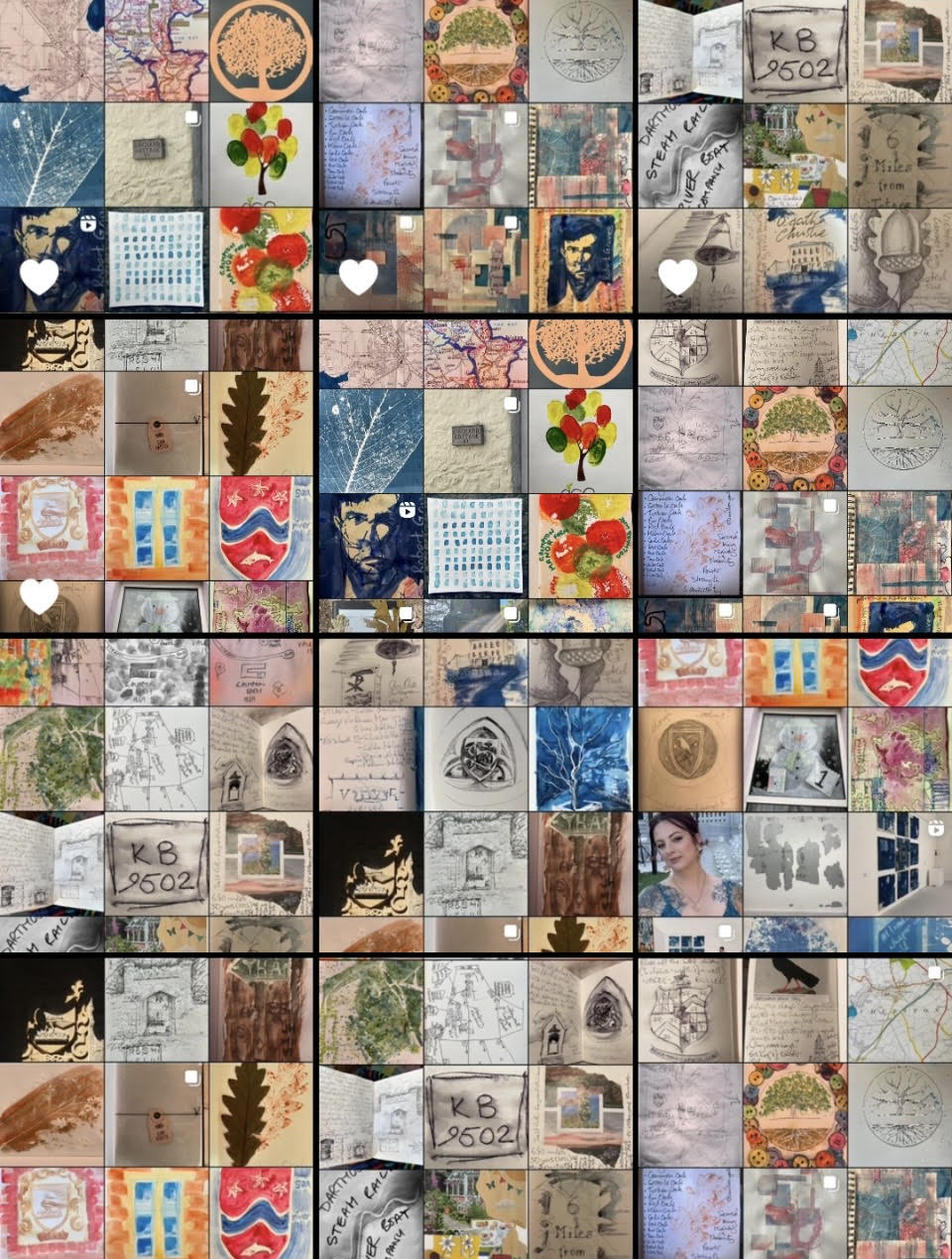
Central to the process was a dedicated sketchbook, used daily to record explorations of village paths, hedgerows, buildings, topographic edges, oral histories and archival references. Rather than merely documenting, the sketchbook became a tool of excavation—revealing hidden patterns in the built and natural environment, and the psychological geography of community life.
Iterative Ink and Wash Studies
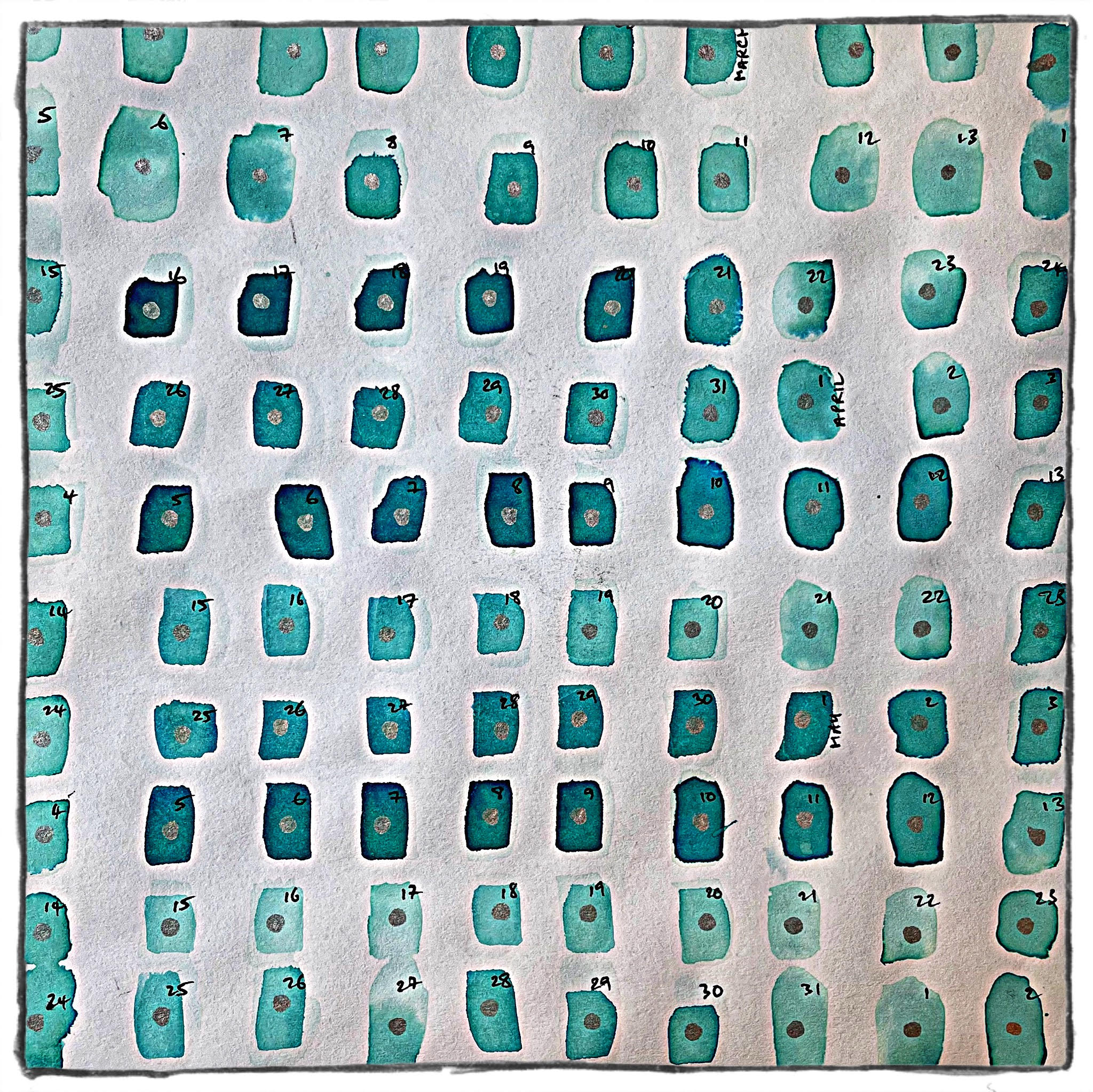
Building from the sketchbook, Liza Jane developed a series of ink and wash drawings, each an iterative response to her evolving understanding of Galmpton. These works explored the tension between mapped structure and lived experience—between the fixedness of place and the fluidity of memory and belonging.
The Final Piece
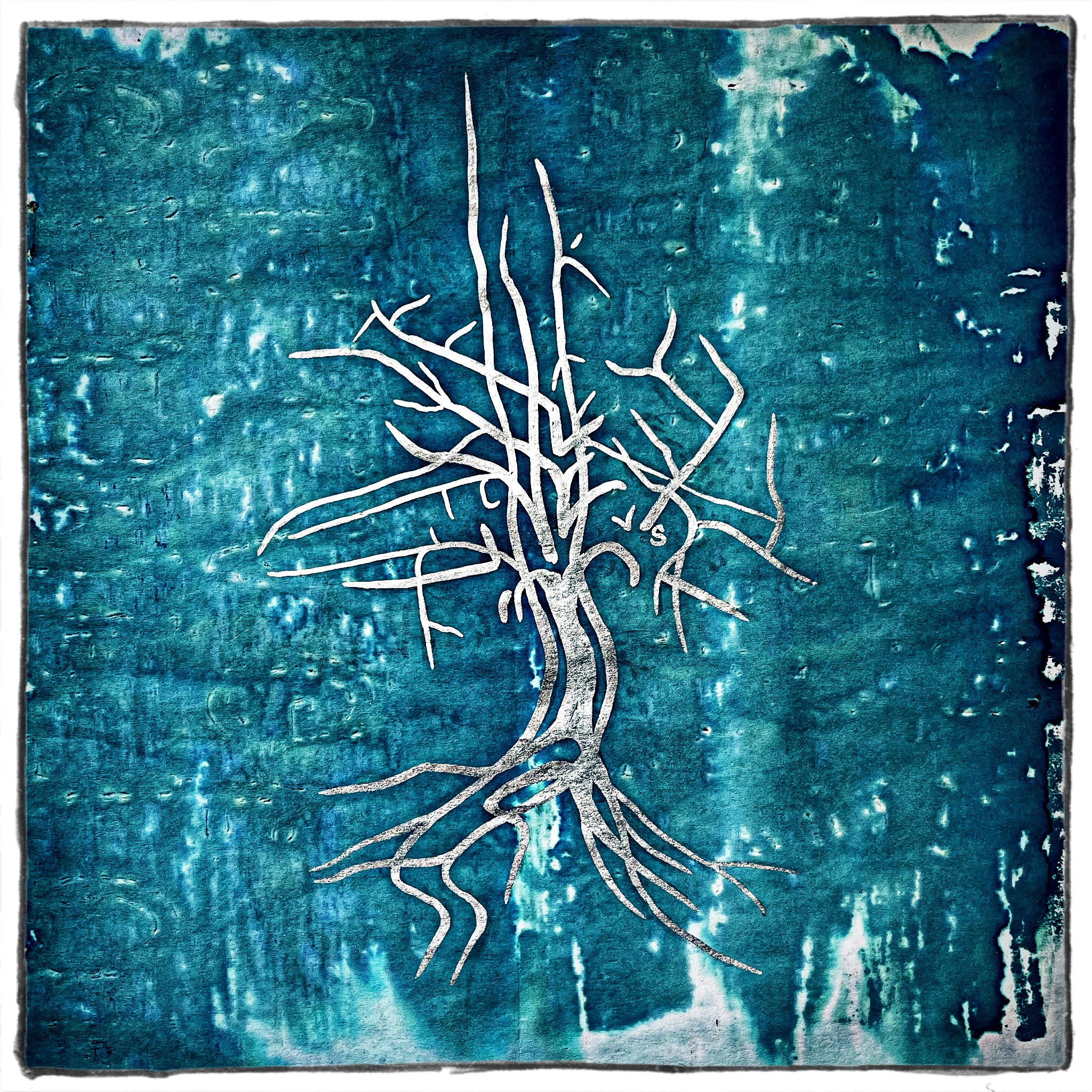
At the heart of the project was the final, 11" x 11" artwork created in ink and wax, with silver highlights. This piece distilled months of enquiry into a singular image: a metaphorical tree, rooted firmly in the ground yet reaching outward—an emblem of community, continuity and growth. The silver touches catch the light, alluding to both natural shimmer and the unseen connections that surface through sustained attention.
The culmination of this research was a two‑venue exhibition in Galmpton: one at the village school, the other at the village institute. Locating the work in community spaces rather than formal galleries reflected the intent to situate art within the rhythms of everyday village life.